CBS Top News|美国国家航空航天局公布200亿美元雄心计划 拟在月球南极附近建立基地
NASA announced ambitious long-range plans Tuesday to spend $20 billion over the next seven years to build a moon base near the lunar south pole featuring habitats, pressurized rovers and nuclear power systems. The announcement came just over a week before the planned launch of NASA's Artemis II around-the-moon mission.
NASA Administrator Jared Isaacman kicked off a series of meetings with contractors at NASA Headquarters in Washington saying he envisioned launching two moon landing missions per year to establish semi-permanent astronaut occupation on the lunar surface to explore, conduct research and develop the technology needed for eventual flights to Mars.
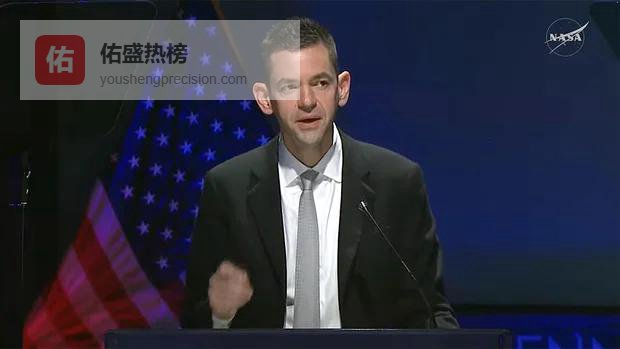
NASA Administrator Jared Isaacman outlined a bold new plan to build a moon base near the lunar south pole at a cost of $20 billion over the next seven years. NASA TV
"This revised, step-by-step approach to learn, to build muscle memory, to bring down risk and gain confidence is exactly how NASA achieved the near impossible in the 1960s," he said, referring to the agency's Apollo program . "But this time, the goal is not flags and footprints. This time, the goal is to stay.
"Today, we are providing a demand for frequent crewed missions," well beyond the previously announced moon landings in 2028, Isaacman said. "We intend to work with no fewer than two launch providers with the aim of crewed landings every six months, with additional opportunities for new entrants in the years ahead. America will never again give up the moon."
The revised Artemis program was unveiled just a few weeks after Isaacman ordered major changes to near-term missions, adding a flight in low-Earth orbit next year to test rendezvous and docking procedures using Orion crew ships and moon landers being built by SpaceX and Blue Origin.
Based on the results of the Artemis II and III missions, NASA now plans to launch at least one and possibly two moon landing missions in 2028 — Artemis IV and V — using one or both privately developed moon landers before pressing ahead with a steady stream of flights to develop a base on the moon.
In the process, NASA will forego development of a planned space station in lunar orbit, known as the Gateway, and repurpose modules and systems already under development to serve as components of the planned moon base.
Under the old architecture, Gateway would have operated in a highly elliptical orbit where Orion crew ships from Earth would meet up with already docked lunar landers for descents to the surface. As it now stands, Orion astronauts will transfer directly to their landers without stopping at an orbital way station.
Gateway was intended to accommodate the propulsion capabilities of the Orion crew ship and its service module engine, which does not have the power to get into and out of a low-lunar orbit like the one used by Apollo crews.
What sort of orbits might be possible in the absence of Gateway was not addressed, but NASA is asking its contractors to help come up with workable alternatives.
"It should not really surprise anyone that we are pausing Gateway in its current form and focusing on infrastructure that supports sustained operations on the lunar surface," Isaacman said. "Despite some of the very real hardware and schedule challenges, we can repurpose equipment and international partner commitments to support surface and other program objectives."
He added that "shifting NASA workforce priority" to the lunar surface will enable the agency to use the moon as a "proving ground for future Mars initiatives" and that the policy change "does not preclude revisiting the orbital outpost in the future."
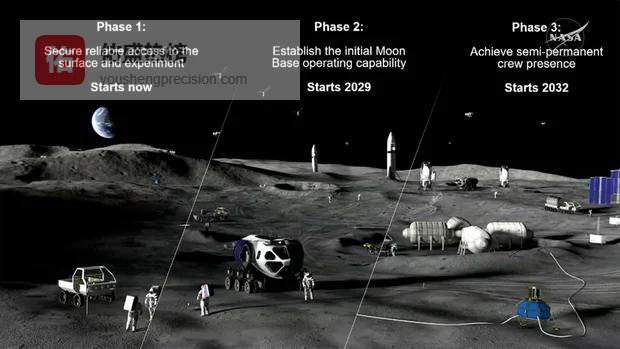
NASA plans to build a planned moon base in three stages, starting with more frequent astronaut and cargo flights to the moon the develop the infrastructure needed to support long-duration crews. NASA TV
The Planetary Society, a space advocacy organization co-founded by the late astronomer Carl Sagan, estimates NASA will have spent about $107 billion on return-to-the-moon plans through 2026 in inflation-adjusted dollars. That's thanks in large part to repeated program changes over the past 20 years by successive presidential administrations.
Shifting priorities for the space programIn the wake of the shuttle Columbia disaster in 2003, President George W. Bush ordered NASA to retire the shuttle, build new rockets and return astronauts to the moon by 2020 in what became known as the Constellation program. The Obama administration concluded that program was not sustainable and ordered NASA to focus instead on a flight to a nearby asteroid.
In his first term, President Trump ordered NASA to shift its focus back to the moon for a proposed 2024 landing in what became known as the Artemis program. The Biden administration generally left Artemis alone, but the program had been slowed by the COVID pandemic, budget shortfalls and a variety of other factors.
Isaacman has repeatedly talked of Mr. Trump's continued support of the Artemis program, and the revised architecture the administrator outlined Tuesday clearly has the approval of the White House.
Speaking of past delays and budget overruns, Isaacman said "the programs we left behind in this effort were not success stories. NASA takes ownership for the shortcomings, but contributing billions more and time that we do not have was not a pathway to success."
The moon base will be built in three phases. Phase 1 will transition from infrequent, once-a-year moon missions to "a templated approach that will generate significant learning through experimentation," he said.
"We will dramatically expand lunar landings ... delivering rovers, instruments and technology payloads that test mobility, power systems ... communications, navigation, surface operations and all the science payload that can be incorporated."
Phase 2 will see development of habitats and infrastructure "supporting regular astronaut operations on the surface." Phase 3 will enable "the permanent infrastructure necessary to sustain a human presence," Isaacman said.
That includes nuclear and solar power systems, crewed and uncrewed rovers, including machines to prepare sites for construction, a cellphone-like communications network, a lunar GPS system and constellations of lunar observation and communications relay satellites.
"The moon base will not appear overnight," Isaacman said. "We will invest approximately $20 billion over the next seven years and build it through dozens of missions, working together with commercial and international partners towards a deliberate and achievable plan."
He also said NASA will accelerate work to enable commercial space stations in low-Earth orbit after the International Space Station is retired while maintaining a steady stream of planetary and other science missions like a flight to deliver multiple small helicopters to Mars.
But the moon was the agency's central focus Tuesday, and Isaacman made it clear that failure is not an option when it comes to beating China back to the lunar surface.
"Should we fail, and should we look on as our rivals achieve their lunar goals ahead of our own, we are not going to celebrate our adherence to excess requirements, policy or bureaucratic process," he said, adding later that "we are not going to sit idly by when schedules slip or budgets are exceeded."
"Expect uncomfortable action if that is what it takes, because the public has invested over $100 billion and has been very patient with respect to America's return to the moon. Expectations are rightfully very high."
MoonArtemis ProgramSpaceNASACopyright ©2026 CBS Interactive Inc. All rights reserved.
美国国家航空航天局(NASA)周二宣布了一项雄心勃勃的长期计划,将在未来七年内投入200亿美元,在月球南极附近建造一个配备居住舱、加压探测车和核能系统的月球基地。该声明发布之际,距离NASA阿尔忒弥斯二号绕月任务计划发射仅剩一周多时间。
美国国家航空航天局(NASA)局长贾里德·艾萨克曼在华盛顿NASA总部启动了一系列与承包商的会议,并表示他设想每年执行两次登月任务,以在月球表面建立半永久性的宇航员驻留基地,开展探索、研究工作,并开发最终飞往火星所需的技术。
他提到美国国家航空航天局(NASA)的阿波罗计划时表示:“这种经过改进的循序渐进方法——通过学习、建立肌肉记忆、降低风险和增强信心——正是NASA在20世纪60年代实现近乎不可能任务的方式。但这次的目标不是插旗留痕,而是长久驻留。”
艾萨克曼表示:"如今我们提出了对频繁载人任务的需求,这远远超出了此前宣布的2028年登月计划。我们计划与至少两家发射服务商合作,目标是每半年实现一次载人登月,并在未来几年为新兴参与者提供更多机会。美国绝不会再次放弃月球。"
在艾萨克曼下令对近期任务进行重大调整后仅数周,修订版阿尔忒弥斯计划便正式公布。该计划新增了明年在近地轨道进行的飞行测试,旨在利用SpaceX和蓝色起源正在建造的猎户座载人飞船与月球着陆器,验证交会对接程序。
根据阿尔忒弥斯二号和三号任务的成果,美国国家航空航天局(NASA)目前计划在2028年发射至少一次、可能两次月球着陆任务——即阿尔忒弥斯四号和五号——将使用一架或两架私营企业开发的月球着陆器,随后持续推进一系列飞行任务以建立月球基地。
在此过程中,美国国家航空航天局(NASA)将放弃原计划在月球轨道上建造的名为“门户”(Gateway)的空间站,转而将正在开发的模块和系统重新利用,作为计划中月球基地的组成部分。
按照原定架构,"门户"(Gateway)空间站将在高椭圆轨道运行,届时从地球出发的"猎户座"载人飞船将与已对接的月球着陆器会合,共同执行月面降落任务。而根据现有方案,"猎户座"宇航员将直接转移至着陆器,无需在轨道中继站停留。
月球门户的设计初衷是为了适配猎户座载人飞船及其服务舱发动机的推进能力,该发动机不具备阿波罗任务机组所使用的低月球轨道往返所需的动力。
报告未提及在没有月球门户站的情况下可能实现哪些轨道运行方案,但美国国家航空航天局(NASA)正要求其承包商协助提出可行的替代方案。
艾萨克曼表示:"我们暂停现有形式的‘月球门户’计划,转而聚焦于支持月球表面持续运行的基础设施建设,这其实并不令人意外。尽管面临切实的硬件和进度挑战,我们仍能重新调整设备用途并整合国际合作伙伴的承诺,以支持月球表面及其他项目目标的实现。"
他补充说,将美国国家航空航天局(NASA)的工作重点转向月球表面,将使该机构能够将月球作为"未来火星计划的试验场",并强调这一政策调整"并不排除未来重新启用轨道前哨站的可能性"。
由已故天文学家卡尔·萨根共同创立的太空倡导组织——行星协会估计,美国国家航空航天局(NASA)到2026年将为重返月球计划投入约1070亿美元(经通胀调整后)。这很大程度上是由于过去20年间历届总统政府对项目的反复调整所致。
太空计划重心的转变2003年哥伦比亚号航天飞机失事后,乔治·W·布什总统下令美国国家航空航天局(NASA)退役航天飞机,建造新型火箭,并在2020年前将宇航员送回月球,这一计划后来被称为“星座计划”。奥巴马政府认定该计划不可持续,转而要求NASA专注于飞往近地小行星的任务。
特朗普总统在其首个任期内曾指示美国国家航空航天局(NASA)将重心重新转向月球,并计划在2024年实现登月,这一计划后来被称为"阿尔忒弥斯"计划。拜登政府基本延续了该计划,但受新冠疫情影响,加之预算短缺及其他多种因素,项目进展有所放缓。
艾萨克曼多次提及特朗普先生对阿尔忒弥斯计划的持续支持,而管理员周二概述的修订版架构显然已获得白宫批准。
谈及过去的延误和预算超支问题,艾萨克曼表示:"我们在此次任务中搁置的项目并非成功案例。美国宇航局承认这些不足,但投入更多资金和时间——这些恰恰是我们所缺乏的——并非通往成功的途径。"
月球基地将分三个阶段建设。他表示,第一阶段将从每年一次的零星登月任务,转变为"通过实验积累重要经验的标准化模式"。
我们将大幅增加登月任务频次……运送月球车、仪器设备及技术载荷,以测试移动系统、动力系统……通信导航、表面作业能力,并整合所有可搭载的科学载荷。
艾萨克曼表示,第二阶段将开发栖息地和基础设施,以“支持宇航员在月球表面的常规作业”。第三阶段将建立“维持人类长期驻留所需的永久性基础设施”。
这包括核能与太阳能供电系统、载人与无人月球车(含用于施工场地准备的机械装置)、类手机通信网络、月球全球定位系统,以及用于月球观测与通信中继的卫星星座。
艾萨克曼表示:"月球基地不会一夜建成。未来七年我们将投入约200亿美元,通过数十次任务逐步构建,并与商业及国际合作伙伴共同推进这一审慎可行的计划。"
他还表示,在国际空间站退役后,美国国家航空航天局(NASA)将加快推动近地轨道商业空间站的建设工作,同时持续开展行星科学等任务,例如向火星运送多架小型直升机的飞行任务。
但周二该机构的核心焦点仍是月球,艾萨克曼明确表示,在与中国竞争重返月球表面这件事上,失败不是可接受的选项。
他说道:"倘若我们失败,倘若我们眼睁睁看着竞争对手先于我们实现登月目标,我们绝不会为恪守过度的要求、政策或官僚程序而沾沾自喜。"随后又补充称:"当进度延误或预算超支时,我们绝不会坐视不理。"
若有必要,即便采取令人不适的措施也在所不惜。因为公众已投入逾千亿美元,并对美国重返月球计划表现出极大耐心。理所当然,人们的期望值非常高。
月亮阿尔忒弥斯计划太空美国国家航空航天局版权 ©2026 CBS互动公司所有。保留所有权利。